


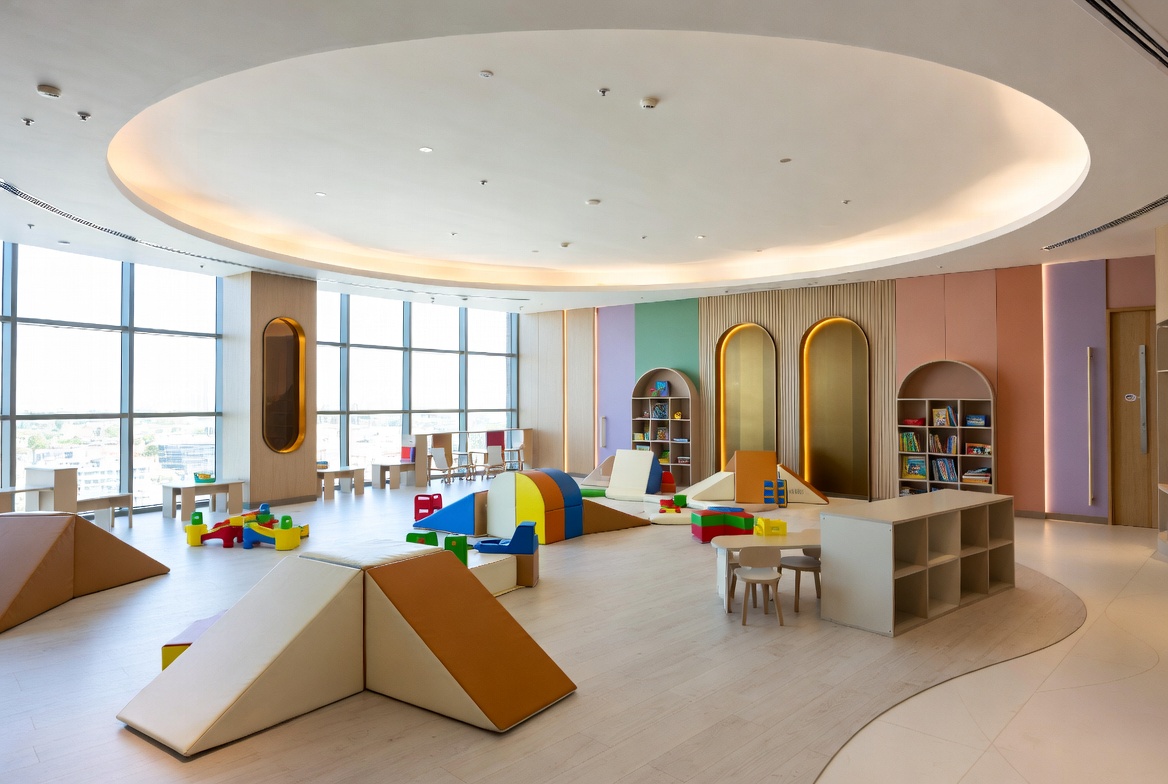


Thinking of buying a nursery in Dubai? This complete guide covers KHDA licensing, due diligence, what to check before you buy, and the real ROI numbers for 2026.
Dubai's nursery and early childhood sector is one of the most recession-resistant business categories you can buy into. Families with children do not cut childcare. The demand is structural, the regulatory framework is clear, and the revenue is predictable month after month. If you are an investor looking for a business with low churn, high community loyalty, and a built-in renewal cycle every academic year, a nursery in Dubai deserves serious consideration.
This guide covers everything a buyer needs to know before making an offer — the KHDA licensing framework, what due diligence looks like, the real numbers behind ROI, and where the pitfalls are.
Why the Dubai Nursery Market Is a Strong Investment Right Now
The numbers behind this sector are hard to ignore. Enrolment at Dubai's private early childhood centres grew by 8% between June 2024 and June 2025, with more than 29,600 children now enrolled across 312 registered centres. That same period saw 38 new centres open — and yet demand continues to outpace supply, particularly in newer residential communities like JVC, Dubai South, and Meydan.
Dubai's population is projected to exceed 3.8 million in 2026, with young expatriate families making up one of its fastest-growing segments. The UAE childcare market as a whole is projected to grow at a 7.5% CAGR, reaching USD 2.5 billion by 2030. For an investor, that kind of sustained structural growth is exactly the backdrop you want when acquiring an existing, operating business.
Monthly fees per child typically range from AED 2,500 to AED 8,000 depending on the location, curriculum, and quality tier. A mid-range nursery running at 40 enrolled children at AED 4,000 per month generates AED 160,000 in monthly revenue. With operating costs typically landing between AED 60,000 and AED 80,000 per month (rent, staff, supplies, insurance), a well-run facility generates healthy operating profit — often before any premium for brand, reputation, or long-term tenancy agreements is factored in.
Understanding the Regulatory Framework: Who Governs Nurseries in Dubai?
Before you evaluate any listing, you need to understand the regulatory landscape. A nursery in Dubai is not regulated by one authority — it sits across five:
1. Dubai Department of Economic Tourism (DET): Issues the trade licence. Nurseries are a mainland-only business in Dubai — there is no free zone pathway for childcare facilities.
2. Knowledge and Human Development Authority (KHDA): The central regulator for all private early childhood centres in Dubai. KHDA oversees curriculum approval, staffing qualifications, facility standards, and ongoing inspection ratings. You cannot operate without KHDA approval, and KHDA must approve any ownership transfer.
3. Ministry of Education (MOE): Issues the private school permit for formal curriculum delivery. The MOE permit carries a fee of AED 10,000 and runs parallel to the KHDA process.
4. Dubai Municipality: Approves the physical fit-out and building suitability. Nurseries are restricted to ground floor or first floor locations only. Children under 18 months must be on the ground floor. Outdoor play space of at least 4 square metres per child is mandatory.
5. Civil Defence: Conducts fire safety inspections and must sign off before the facility can operate.
When buying an existing nursery, all of these approvals need to be verified as current, valid, and transferable. A licence that expires mid-year — or one that cannot be cleanly transferred to a new owner — creates immediate operational risk.
What KHDA Actually Looks for (And Why It Matters for Valuation)
KHDA inspects nurseries across several key performance areas: quality of teaching and learning, child safety and wellbeing, curriculum design, leadership, and community engagement. Results are rated across a scale from Outstanding to Good to Acceptable to Weak.
A nursery's KHDA rating is not just reputational — it directly affects its pricing power and its ability to attract and retain enrolments. A "Good" or above rating in the most recent inspection adds tangible value to the business. An "Acceptable" or flagged rating should trigger deeper questions about staff qualifications, parental satisfaction, and recent enrolment trends.
KHDA also mandates that any marketing or advertising a nursery undertakes must be approved by KHDA before going live. This is a detail many new buyers overlook but it affects how quickly you can reposition or rebrand the business after acquisition.
Staff qualifications are non-negotiable. Lead educators must hold a relevant bachelor's degree plus a minimum of three years of childcare experience, and their credentials must be KHDA-approved individually. When conducting due diligence, verify that key staff are on valid employment contracts, their KHDA approvals are in order, and that you understand the risk of staff turnover post-acquisition.
Due Diligence: What to Check Before You Sign
Buying a nursery is different from buying a retail business or a gym. The regulatory complexity, the staff dependency, and the parent community relationships all require a more thorough review process. Here is what BFS recommends every serious buyer covers:
Licences and Approvals
- Confirm the DET trade licence, KHDA operational permit, MOE permit, Dubai Municipality fit-out approval, and Civil Defence certificate are all valid and not expiring within 6 months of your target closing date.
- Verify that KHDA has confirmed in writing that the licence is transferable to the new owner. This is not automatic — KHDA reviews ownership changes separately.
Financial Records
- Request audited financials or at minimum VAT-registered revenue records for the past 24 to 36 months. Monthly revenue should be verifiable by cross-referencing fee invoices and bank statements.
- Review the monthly fee schedule and confirm it matches actual collections. Ask for the current occupancy rate by age group — a nursery running at 60% capacity looks very different from one at 90%.
- Understand the lease structure. What is the rent? When does it expire? Is there a rent escalation clause? A nursery with two years left on a below-market lease is a very different asset from one coming up to renewal in a landlord's market.
Enrolment Quality
- Ask for a breakdown of enrolled children by age group and nationality. Understand which waitlist, if any, exists.
- Check for any known planned departures — families relocating, children moving to school-age programmes. Seasonal attrition at the end of the academic year is normal but should be quantified.
Staff Stability
- Identify which staff members are essential to the business and whether their departure would affect the KHDA licence or parental confidence. In many nurseries, the principal or head teacher is the primary trust anchor for the parent community.
- Review all employment contracts, KHDA individual approvals, and visa statuses.
Physical Facility
- Confirm the space meets KHDA minimums: at least 2.3 square metres of indoor space per child and 4 square metres of outdoor play area per child.
- Assess the condition of fit-out, furniture, educational equipment, and safety installations. Factor any required upgrade investment into your offer price.
KHDA Rating and Inspection History
- Request copies of the most recent KHDA inspection report. A business with a declining trajectory of ratings warrants additional scrutiny. A business with a strong, stable rating is more defensible post-acquisition.
Curriculum Matters: What Programmes Are Licenced in Dubai?
Dubai's 312 nurseries currently offer 17 different early years programmes. The most widely adopted is the UK's Early Years Foundation Stage (EYFS), offered at approximately 240 nurseries. Other programmes include Montessori, the International Baccalaureate Primary Years Programme (IB PYP), the American curriculum, and various bilingual approaches.
The licenced curriculum is attached to the existing KHDA approval. If you intend to change the curriculum after acquisition, this requires a fresh KHDA application and approval process — it is not a simple administrative update. Factor this into your planning if repositioning is part of your investment thesis.
What Does a Nursery in Dubai Typically Sell For?
Valuation of nurseries in Dubai is driven primarily by three factors: verified monthly revenue, enrolment stability, and the strength of the KHDA licence and rating. Goodwill, brand reputation, and location within a residential community also carry significant weight.
As a general benchmark, a turnkey nursery with a clean KHDA licence, stable enrolment, and two to three years of verified profitability will typically trade at a multiple of 2x to 3.5x annual net profit, with adjustments for licence strength, remaining lease duration, curriculum positioning, and physical asset condition.
Businesses with an "Outstanding" or "Good" KHDA rating, long-standing community reputation, and established waitlists will command the upper end of that range or above it. Businesses with expiring licences, recent rating concerns, or high staff turnover should be priced accordingly — and represent opportunities for operational buyers who know how to resolve those issues.
The Buyer Profile: Who Should Consider a Nursery Acquisition?
A nursery is not a passive investment. It requires hands-on management or a trusted operational team you can retain post-acquisition. The ideal buyer is either:
- An operational buyer — an educator, childcare professional, or experienced business owner who wants to run the facility and grow it actively; or
- A strategic investor — someone acquiring a platform to roll up multiple nurseries in a growing residential catchment, leveraging curriculum positioning and brand consistency across sites.
Pure passive investors who are unfamiliar with the regulatory environment or early childhood education tend to struggle. The value in a nursery is in its community relationships and its people — both of which require active stewardship.
Why Buy an Existing Nursery Rather Than Start One?
Setting up a new nursery in Dubai from scratch involves navigating all five regulatory bodies, completing a full fit-out to KHDA specifications, hiring and credentialing a full team, and then waiting through an 8 to 14-week approval timeline before you enrol your first child. After that, you are still building from zero enrolment.
By acquiring an established nursery, you step into an operating business with existing enrolment, staff in place, an active KHDA licence, and a parent community that already trusts the brand. The regulatory overhead has already been absorbed by the seller. For most buyers, the premium paid for an established business is more than justified by the time, risk, and opportunity cost saved.
Ready to Explore Nurseries for Sale in Dubai?
BFS Commercial Brokers works with serious buyers and qualified sellers across the UAE's education and childcare sector. If you are looking to acquire an established, KHDA-licensed nursery in Dubai, we can connect you with verified listings, handle NDA and buyer qualification processes, and support you through the due diligence and negotiation phasesOr contact the BFS team directly to discuss your acquisition criteria confidentially.







Sharing Is Caring!