




A buyer sat across from us earlier this year, looking at the asset list for a home healthcare company, and asked a fair question. Where is the business?
He had a point. The list ran to half a page. An office in Al Barsha with eleven months left on the lease. Two desks. A second-hand Nissan. Some blood pressure monitors, a nebuliser and a box of consumables. Against that, an asking price in the high six figures.
He had spent the previous month looking at clinics, where you walk in and see what your money buys. Dental chairs. A reception desk. A waiting room full of people. Home healthcare offers none of that reassurance, and buyers who judge it by the same instinct either walk away from a good business or overpay for a bad one.
The company he was looking at was worth roughly what was being asked. Almost none of that value appeared anywhere on the asset list.
The business happens somewhere you cannot see it
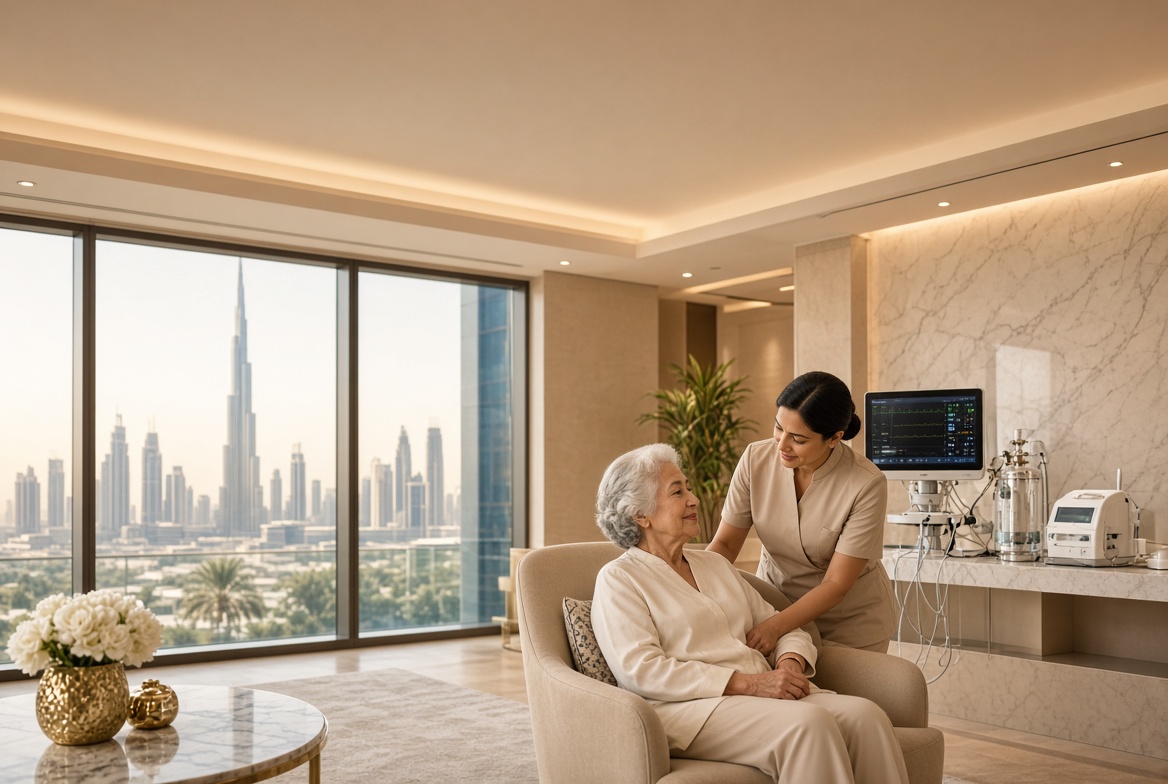
Home healthcare means clinical care delivered where the patient lives. A nurse who visits an elderly resident in Mirdif every morning. A physiotherapist working through recovery exercises with a hip replacement patient in Jumeirah. A live-in carer with a family in Al Warqa. Someone drawing blood, dressing a wound, or sitting with a newborn overnight so the parents can sleep.
There is no premises because the premises is somebody's living room. The office exists because the regulator requires an address, not because the work happens there.
That structure is why the sector has grown quietly for years while nobody paid much attention to it. Dubai's expatriate population is ageing in place. The people who arrived in the eighties did not all leave, and a good number of residents now bring elderly parents to live with them rather than manage their care from three time zones away. Hospitals discharge earlier than they used to. Insurers have worked out that a nurse in a home costs less than a bed in a hospital, and have started covering accordingly.
None of that shows up in a photograph of an office.
Four things carry the value
Strip away the desks and the Nissan, and a home healthcare company is really four assets held together by a company name.
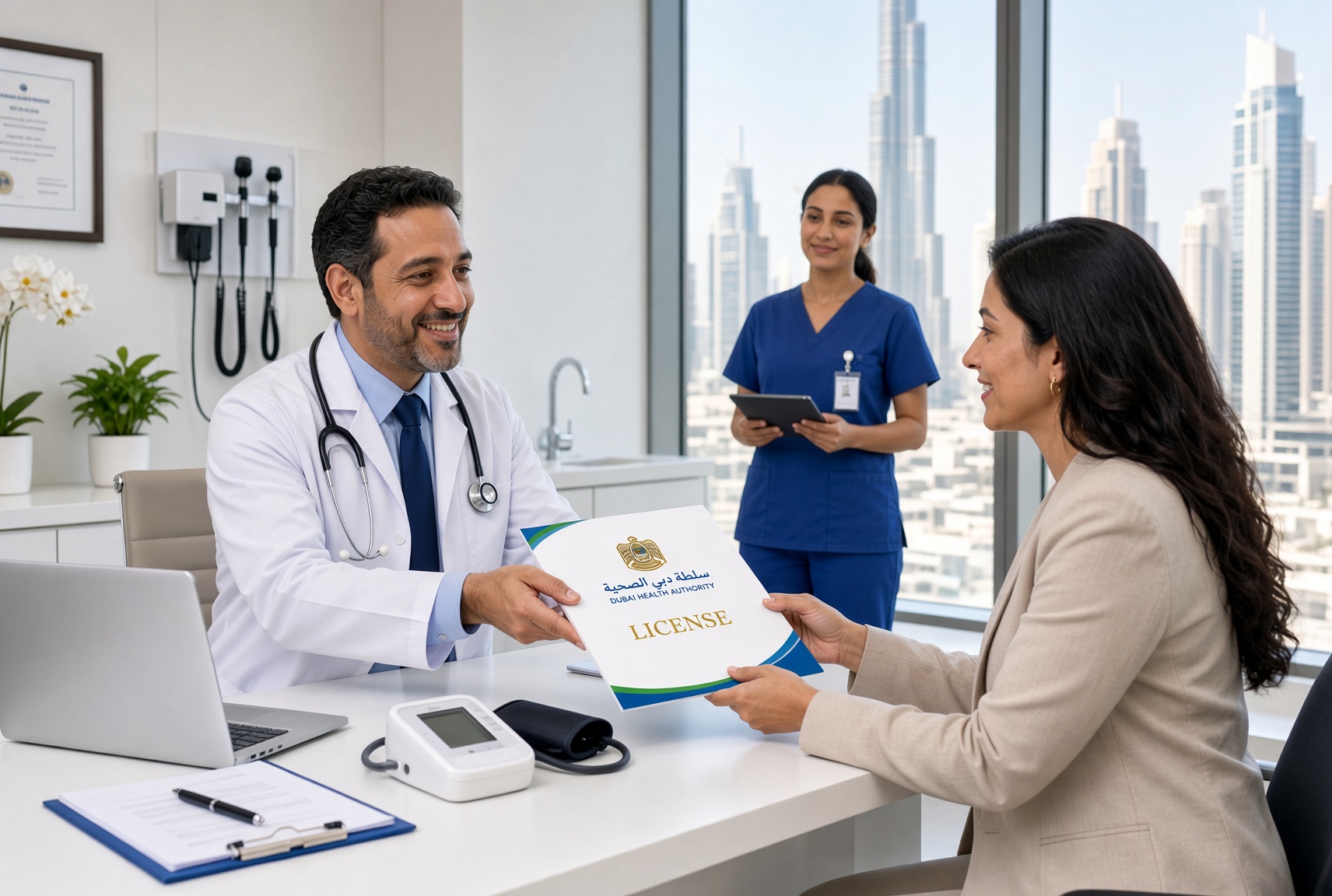
The first is the licence. The Dubai Health Authority treats home healthcare as its own facility category, separate from clinics. A clinic licence does not let you treat people in their homes. Getting a home healthcare licence from scratch means a registered office, a properly qualified person in charge of the facility, and an approval process that moves at the authority's pace rather than yours. DHA updates its requirements periodically, so anyone buying should confirm the current position directly rather than relying on what was true last year. What does not change is the basic economics. The licence is the hardest part to replace, which is why it carries the most value.
The second is the nurses. Every clinical staff member holds an individual DHA professional licence, separate from the company's facility licence. Bringing a licensed nurse into the UAE is slow and costly. A team already recruited, already licensed and already on the company's visas represents months of work and a significant sum of money the buyer does not have to spend.
The third is insurance approvals. A company approved on insurance networks receives patients rather than chasing them. Approvals take time to secure and do not automatically survive a change of ownership, which makes this the item most worth verifying and least worth assuming.
The fourth is the patients themselves, and here the detail matters more than the headline. A live-in elderly care arrangement can run for years and produce predictable monthly income. A one-off wound dressing produces income once, after which the company has to find another patient. Two companies can report identical annual revenue while owning completely different businesses.
Where buyers get it wrong
The most common mistake is buying the company and losing the people.
Patients in home care form relationships with a particular nurse, not with a brand. The family in Al Warqa is loyal to the woman who has come every morning for two years. If she leaves after the sale, there is a fair chance the family leaves with her. A buyer who pays for a patient book without securing the team has bought a licence and an empty office, which is a real outcome and one we have seen.
The second mistake is treating revenue as a single number. It is worth asking, for every dirham the company earns, whether that dirham arrives again next month or has to be won again. Contracted long-term care and one-off visits sit at opposite ends of that question, and they should not be valued the same way.
The third is underestimating staff end-of-service liability. In a business where almost the entire cost base is people, accrued gratuity can be a substantial figure sitting quietly on the wrong side of the balance sheet.
No published multiples exist
Anyone who quotes you a precise valuation multiple for Dubai home healthcare is inventing it. There is no published index for the sector and the transaction sample is small.
What can be said honestly is that the range is wide, and that it is wide for a reason. A company with a licence, three nurses and a handful of private patients is a different asset from one with insurance network approvals, a stable clinical team and a book of long-term contracted care. The first sells for a figure reflecting mainly the licence and the time it saves. The second sells for considerably more, and deserves to.
Value it on the four things that carry it. The office lease is not one of them.
Coming back to the buyer
He did buy the company in the end, though not on the original terms. He structured part of the price to depend on the clinical team still being in place six months after handover, which cost the seller nothing if the team stayed and protected him if they did not. The nurses stayed. The patients stayed with them.
He told us later that what changed his mind was realising he had been looking at the wrong list. The asset schedule described what the company owned. It said nothing at all about what the company was.
We handle healthcare business sales across the UAE. If you are buying or selling in this sector, you can reach us .
.jpg)





Sharing Is Caring!